

Jun
HYROX is one of the most welcoming fitness races in the world — but that doesn’t mean it’s easy to do well. Most first-timers walk away saying the same thing: “I made it harder than it needed to be.”
Here are the 7 most common mistakes first-time HYROX athletes make, and exactly how to avoid each one.
Mistake 1: Going Out Too Fast on the First Run
This is mistake #1 for a reason. Adrenaline is real. The crowd is loud. Everyone around you is sprinting. You feel good. You run your first kilometer at race-pace effort when your target pace calls for something much more controlled.
By Run 5 or 6, you’re suffering for those early seconds. By the sandbag lunges, you’re in survival mode.
The fix: Know your target 1 km run pace before race day — not as a feeling, but as an actual number. Use the GridRox Pace Calculator to generate your goal splits, then practice hitting that exact pace in training. On race day, run Run 1 at a pace that feels almost too easy.
Mistake 2: Underestimating the Burpee Broad Jumps
Every first-timer underestimates the burpee broad jump station. On paper, “80 meters” doesn’t sound like much. But 80 meters of burpee-jump-stand-burpee-jump — while already tired from 3 km of running and two sled stations — is a different proposition.
Athletes who sprint the first 20 meters because they feel fine often slow to a crawl at the 40 m mark. Some stop completely at 60 m.
The fix: Practice burpee broad jumps weekly — not just to build fitness, but to internalize your sustainable rhythm. Your jump distance should be consistent, not maximal. A steady 1.2–1.5 m jump every rep will cover the 80 m faster than an inconsistent 2 m jump that wrecks your rhythm.
Mistake 3: Attempting Too Many Wall Ball Reps Unbroken
“I’ll knock out 50 unbroken at the end” is what first-timers tell themselves. By the time they reach the wall balls, they’ve run 7 km and completed 7 stations. Fifty unbroken rarely goes as planned — most athletes fail somewhere between 25–40 reps, drop the ball, and end up taking a longer rest than if they’d broken sets from the start.
The fix: Commit to a set scheme before you touch the ball. A common approach: 20-15-15-15-15-10-10. Take planned 8–12 second rests between sets. Starting each set when you still have gas guarantees you’ll finish without catastrophic failure. Use this approach in training to prove to yourself it works.
Mistake 4: Wearing the Wrong Shoes
HYROX is 8 km of running plus functional movements. Most athletes show up in one of two wrong choices:
- Pure running shoes: Great for the runs, terrible for sled mechanics and lateral movements — can compress weirdly under load
- Pure gym shoes: Too heavy and rigid for 8 km of running, especially as fatigue accumulates
Blisters, ankle instability, and excessive fatigue are the results.
The fix: Wear a hybrid training shoe or trail running shoe that provides both cushioning for running and stability for functional work. Brands like Nike Metcon, Reebok Nano, Salomon Speedcross, or New Balance Minimus Trail all work well. Whatever you choose, test it in training for at least 6 weeks before race day — never debut new shoes at a race.
Mistake 5: Skipping Transitions in Training
Training in isolation looks like: 3 km run on one day, sled work on another, wall ball practice on a third. This is fine for building individual fitness. But HYROX punishes athletes who train components separately and never practice the transitions.
The specific pain point: finishing a 1 km run and immediately having to perform the SkiErg or start sled push mechanics — when your heart rate is spiked and your breathing is ragged. That transition is a skill. It requires practice.
The fix: Include at least 2 combined run/station sessions per week from week 3 of your training onward. Run 1 km, then immediately begin your station with zero rest. The first few sessions feel awful. By race day, the transition will feel almost manageable.
Mistake 6: Ignoring the Farmers Carry
The farmers carry gets the least training attention of any HYROX station because it “looks easy” — you’re just walking. But 200 m with heavy implements after your legs have been destroyed by sleds, burpees, and rowing is a different exercise than a fresh farmers carry in the gym.
Common failures: grip gives out, athletes rush and stumble, posture collapses, and planned one-stop breaks turn into three stops.
The fix: Train the farmers carry at race weight regularly. Practice 150–200 m sets in training with zero rest. Also train your grip separately: dead hangs, heavy bar holds, bucket carries. Pre-decide your rest stop (the 100 m turnaround is the natural break point) so fatigue doesn’t make that decision for you.
Mistake 7: Not Reviewing the Venue Layout in Advance
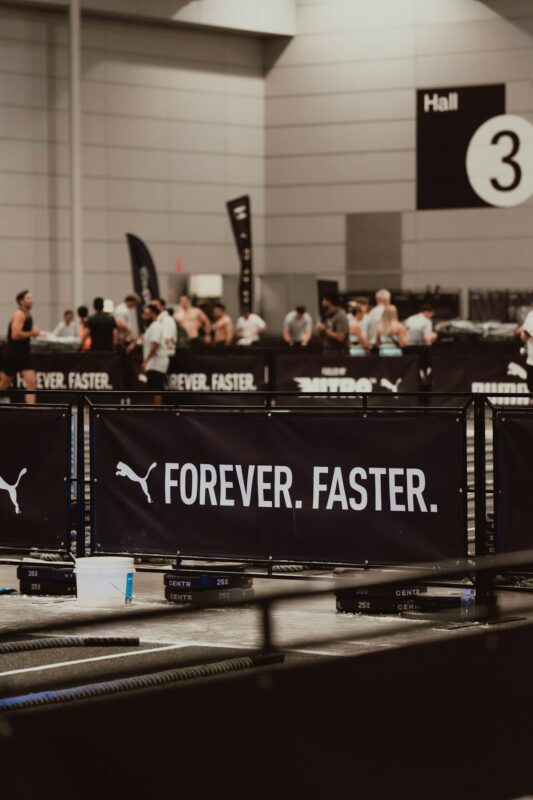
HYROX events are large, multi-hall operations. First-timers often arrive, check in, and then wander the course with 15 minutes before their wave — unsure where to warm up, where the start is, and in which direction the sled runs.
Confusion wastes time and energy. Worse, athletes who aren’t sure of the course rules occasionally receive penalties for missed reps or incorrect movement direction.
The fix: Arrive 75–90 minutes before your wave. Do a full venue walkthrough: find your start corral, locate each station, identify the water stations, and understand the flow of the course. Read the HYROX rules document in advance to understand rep standards for wall balls and burpee broad jumps specifically — these are where most penalties happen.
Bonus: Mistake 0 — Training Without a Plan
The foundation of all these mistakes is usually the same: arriving at HYROX without structured preparation. Running a few times and hitting the gym a few times isn’t HYROX training — it’s general fitness maintenance. HYROX requires specific preparation: combined sessions, station-specific practice at race weight, pacing training, and at least one full simulation.
Follow a structured plan like the 12-Week HYROX Training Plan and you’ll arrive at the start line having done the work. The mistakes above will still be visible in athletes around you — but not in your race.
Frequently Asked Questions
What’s the biggest mistake first-time HYROX athletes make?
Pacing the first run too fast is the single most common mistake. Adrenaline on race day causes athletes to run their opening kilometer significantly faster than their training pace — and they pay for it in the second half. The fix is knowing your exact target 1 km pace before the race and treating Run 1 with discipline even when you feel great.
How hard should the HYROX wall balls be?
At the end of a HYROX race, wall balls will feel very hard regardless of how well you trained. The key is managing that hardness through set strategy — plan your breaks before you start, and commit to them. Attempting large unbroken sets after 7 km of running and 7 stations almost always leads to failure mid-set and longer overall recovery time.
What should I practice most before my first HYROX?
Prioritize: (1) combined run-to-station transitions, (2) wall balls at race weight in sets, and (3) burpee broad jumps for 60–80 m continuously. These three are where first-timers most frequently suffer. The other stations are important, but these three are where race day surprises happen.
Related: HYROX Beginner Guide · 12-Week Training Plan · Pacing Guide · Pace Calculator
GridRox is not affiliated with or endorsed by HYROX GmbH.
FREE TOOL
What's Your Target Pace?
Enter your goal time — get exact splits for every run and station, based on 260,000+ real HYROX finisher results.
OPEN PACE CALCULATOR →